Vinnies Australia (St Vincent de Paul Society) · 2021 – 2022
Directing scarce digital investment where the mission goes furthest
A distributed, resource-constrained digital function with no shared basis for choosing between good options. Metric-driven prioritisation gave it one, weighing mission impact rather than efficiency alone, and respecting local variation instead of flattening it.
Quick read
How mission value guided scarce digital investment
- My role
- Senior Service Designer
- Key decision
- The critical decision was national consistency versus local relevance.
- Evidence
- A mission-led prioritisation framework and supporting toolset gave leaders a shared basis for directing limited digital investment across local contexts.
At a glance
- A unified digital roadmap used across distributed leadership
- Metric-driven prioritisation weighing mission impact, not just efficiency
- Distributed leadership working from shared mission goals
- Frameworks designed to respect local variation in service delivery
Project snapshot
Scope and attribution
Engagement summary
- My role
- Senior Service Designer
- Duration
- 10 months · May 2021 – Feb 2022
- Mandate
- Give a distributed digital function a shared, evidence-based way to prioritise limited investment against mission impact while respecting local service variation.
- Team and collaborators
- National and geographically distributed leadership, the digital function and service stakeholders with local delivery knowledge.
- What I owned
- Service-ecosystem mapping, personas, journeys, feature blueprints, the mission-led prioritisation framework, supporting project-management tools and roadmap alignment facilitation.
- What others owned
- Vinnies leaders owned mission priorities, investment decisions and implementation; local teams retained authority over contextual service delivery.
- Constraints
- Scarce resources, distributed decision-making, different local service contexts and outcomes that could not be reduced to efficiency alone.
- Status
- A unified digital roadmap and shared prioritisation discipline were established at handover; no later service-reach metric is claimed without evidence.
Evidence and confidentiality
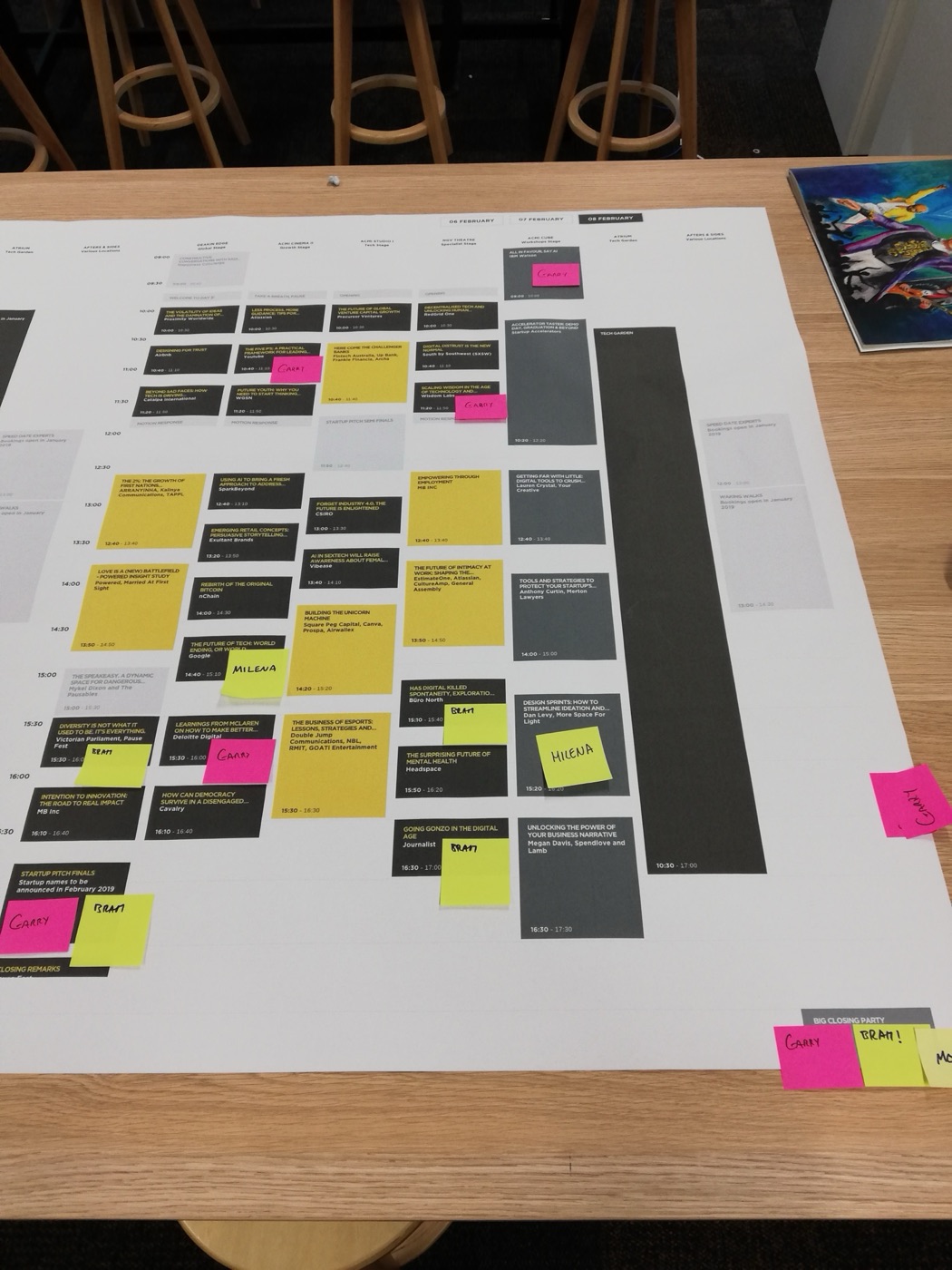
The client context and photographed prioritisation exercise are real. Service-user details and confidential working material are omitted.
The challenge
Vinnies Australia supports people in need across a nationally distributed network of service contexts, each with real local variation in how support is delivered. Its digital channels needed to extend mission impact by reaching previously under-represented social groups, but the digital function was distributed and resource-constrained, and without a shared evidence base it was difficult to know which limited investments would reach the furthest.
The approach
I brought structure and evidence-based prioritisation to the function: mapping the service ecosystem, creating personas, journey maps, feature blueprints and prioritisation frameworks, and engaging distributed leadership to identify strategy gaps and connect disparate teams around shared goals.
My contribution was a shared method for weighing mission impact without imposing one service model.
Outputs delivered
Organisational outcomes
Geographically distributed leaders worked from a unified digital roadmap for the first time, with investment choices judged against explicit mission value.
Business / customer evidence
- A mission-led prioritisation framework and supporting toolset gave leaders a shared basis for directing limited digital investment across local contexts.
- The work demonstrates a shared decision system. It does not claim an attributable increase in service reach, funding efficiency or user outcomes because no such measure was available for publication.
Decision / trade-off
The critical decision was national consistency versus local relevance. The framework standardised how value was judged without imposing one service model on materially different local contexts.
What I learned / next
Mission-led prioritisation needs an explicit value model because efficiency alone can direct resources away from people who are harder to reach. The next step would be to connect roadmap decisions to service-reach and inclusion measures over time.
Continue exploring
Related evidence and approach
Start a conversation
See a similar decision in your organisation?
Tell me where the evidence, ownership or implementation is getting stuck. I can help assess whether the approach in this case fits your context.