Kerzner International · 2024 – Present
A shared language for guest value, across three luxury brands
Brand, CRM, operations, data and finance had no common way to argue for the same guest. This gave them one: a lifecycle, a set of needs and an operating rhythm that connect guest experience to commercial outcomes across One&Only, Atlantis and SIRO.
Quick read
How guest value connected strategy, governance and delivery
- My role
- Service Design & Value Enablement Consultant
- Key decision
- The central trade-off was short-term property or channel wins versus a portfolio-wide relationship model.
- Evidence
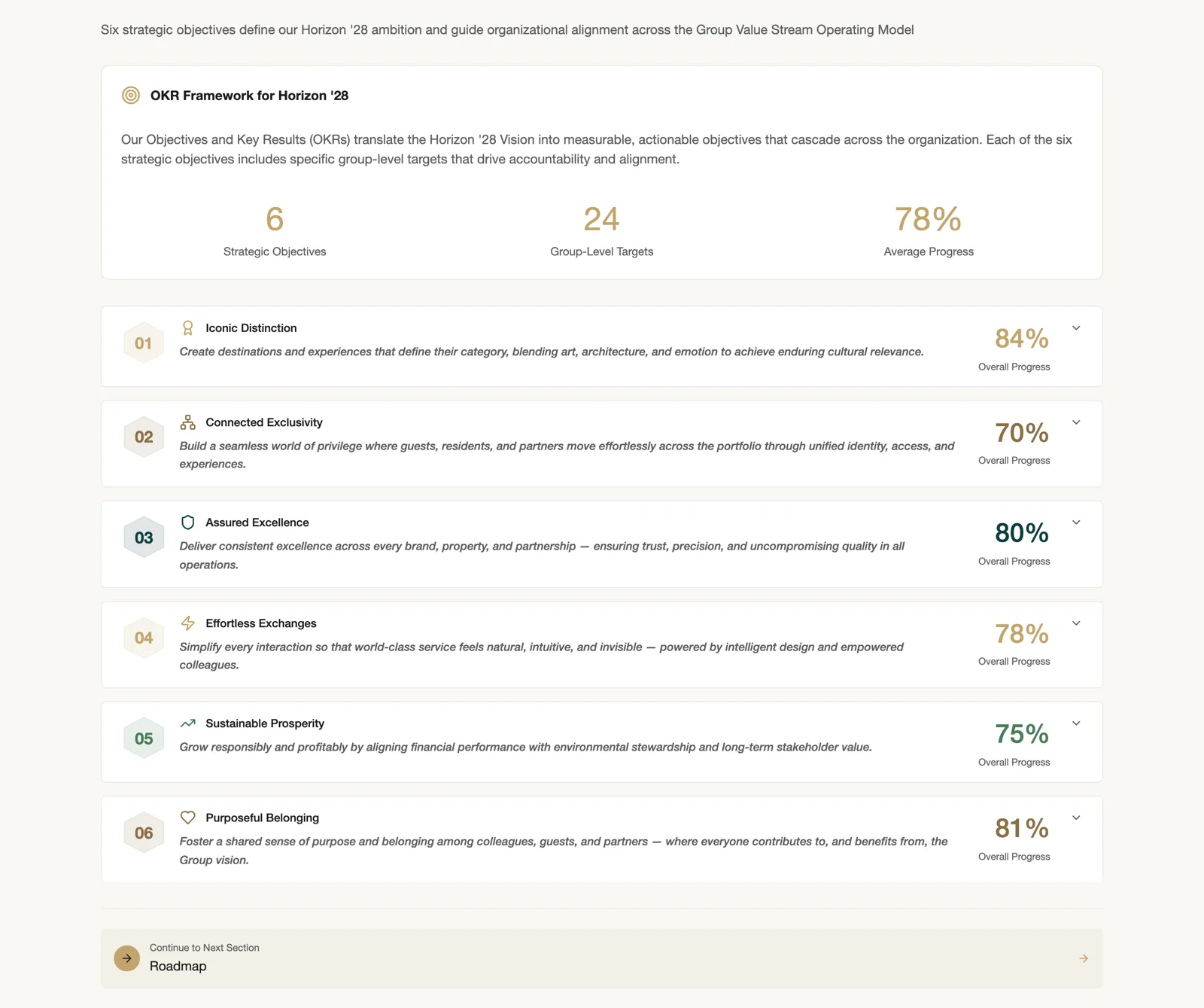
- The work supported the group’s 3-year strategy and connected six strategic objectives to 24 group-level targets and a quarterly delivery roadmap.
At a glance
- A teaching-for-adoption playbook uniting a six-stage stakeholder lifecycle, six stakeholder needs and seven value-generation phases
- An operating rhythm of unified backlog, shared OKRs, team-of-teams prioritisation, showcases and outcome reviews
- Shaped the concept for an Experience & Innovation Management Office
- Supported the group's 3-year, Board-level strategy
Project snapshot
Scope and attribution
Engagement summary
- My role
- Service Design & Value Enablement Consultant
- Duration
- Retained engagement · 2024 – Present
- Mandate
- Create a shared way to connect guest value, commercial priorities, organisational ownership and delivery across One&Only, Atlantis and SIRO, then make the group’s 3-year strategy usable as a working product.
- Team and collaborators
- Brand, commercial, digital, CRM, sales, revenue, operations, data and finance stakeholders across the group and brand portfolio.
- What I owned
- The playbook architecture, stakeholder and value models, value-generation lifecycle, governance canvases, operating rhythm and the design and build of the interactive strategy site.
- What others owned
- Kerzner leaders owned strategic choices, investment approval, operating adoption and delivery within their functions and brands.
- Constraints
- Three distinct luxury brands, commercially sensitive material, fragmented ownership and an engagement that is still active.
- Status
- Playbook and strategy product delivered; adoption continues. The Experience & Innovation Management Office remains a funded-decision proposal, not a completed implementation.
Evidence and confidentiality
The client context and workshop photography are real. Strategy screens are anonymised and no confidential commercial performance data is shown.
The challenge
Kerzner International, the group behind One&Only, Atlantis and SIRO, had no shortage of ambition. But activity was spread across brand, commercial, digital, CRM, sales, revenue and operations stakeholders, each with their own priorities, language and measures of success.
The predictable problems followed: effort concentrated on short-term wins rather than long-term roadmaps, work prioritised by urgency rather than enduring commercial value, and promising initiatives stalling between phases because nobody owned the handover. Teams needed a common language for outcomes, ownership, progression and measurement.
The approach
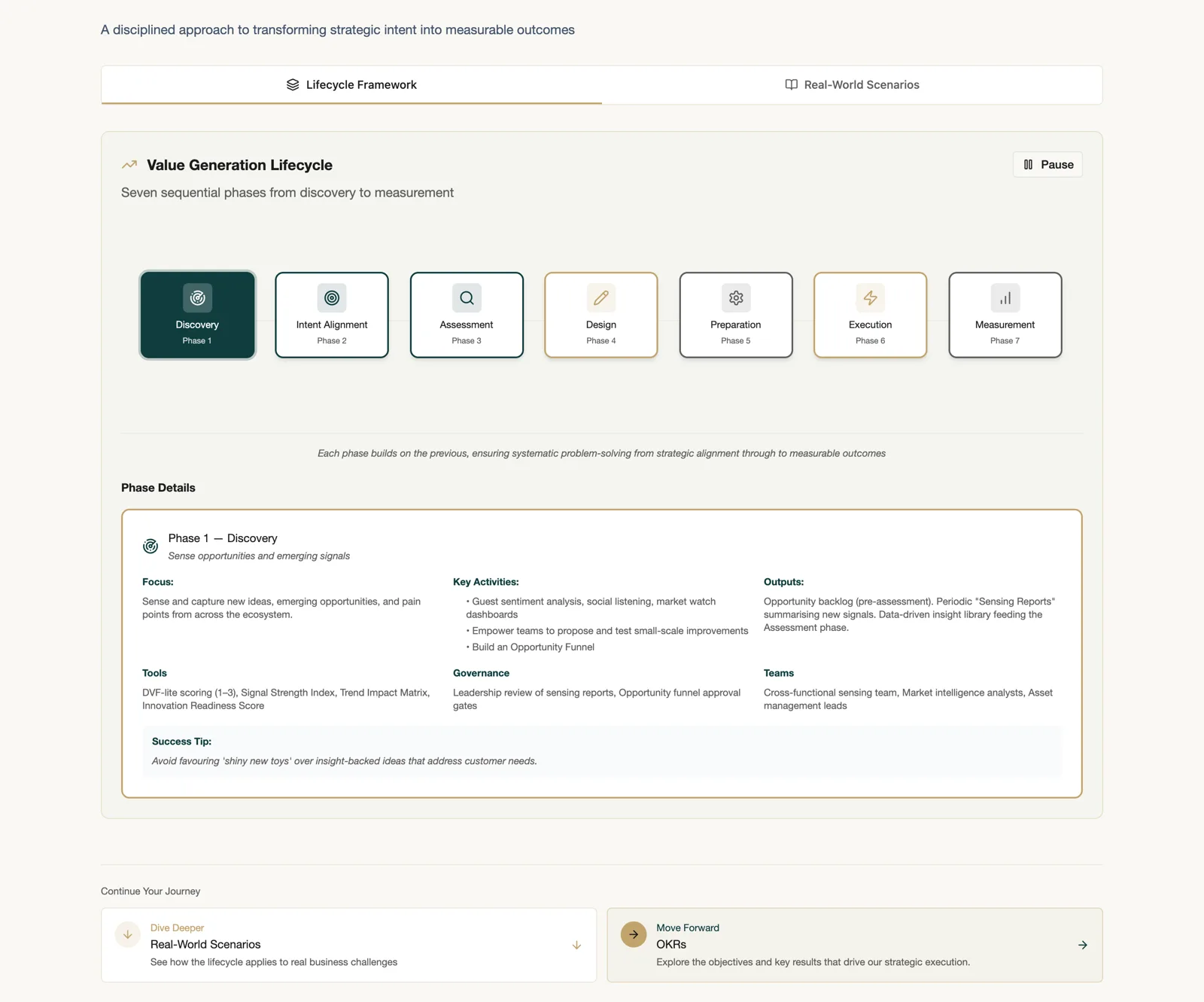
I designed a commercial value-enablement playbook built on three fixed concepts. A stakeholder lifecycle describes the relationship from first awareness to renewed engagement: discover, consider, commit, experience, remember, rediscover. A research-based model of six stakeholder needs, from control and confidence through to meaning and connection, describes the kind of value that matters most at each point. A value-generation lifecycle then shows how the organisation progresses work internally: frame, intent, assess, design, prepare, execute, measure.
Combining the external lifecycle with the internal phases produces a matrix that makes every piece of work precise: which stage of the relationship it improves, which need it serves, and how mature the organisation's response is. Around the model, I designed the operating rhythm to run it, including a unified backlog, shared objectives and key results, team-of-teams prioritisation, progress showcases and outcome reviews. Governance canvases, role lanes and RACI logic keep ownership clear. The framework was pressure-tested against real scenarios including MICE, weddings, resort openings, branded residences and wellness-led propositions.
Outputs delivered
In practice
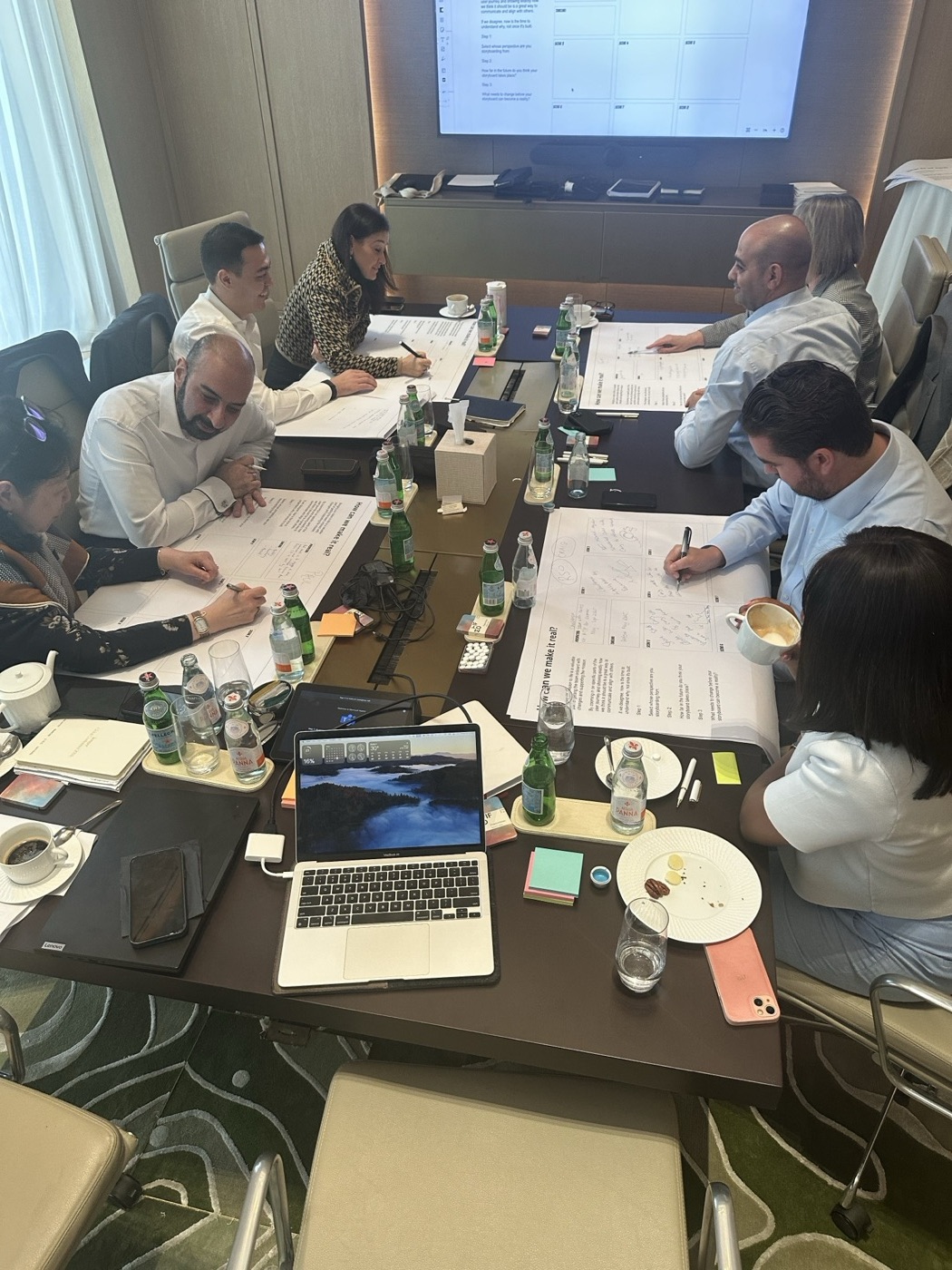
Organisational outcomes
Kerzner gained a reusable way to align teams around human needs, commercial value and organisational readiness. Written to teach for adoption rather than sit on a shelf, the playbook strengthened the operating model, clarified ownership and improved commercial prioritisation across brand, CRM, operations, data and finance, and it shaped the concept for an Experience & Innovation Management Office connecting guest and employee experience to Board-level targets (currently pending budget approval).
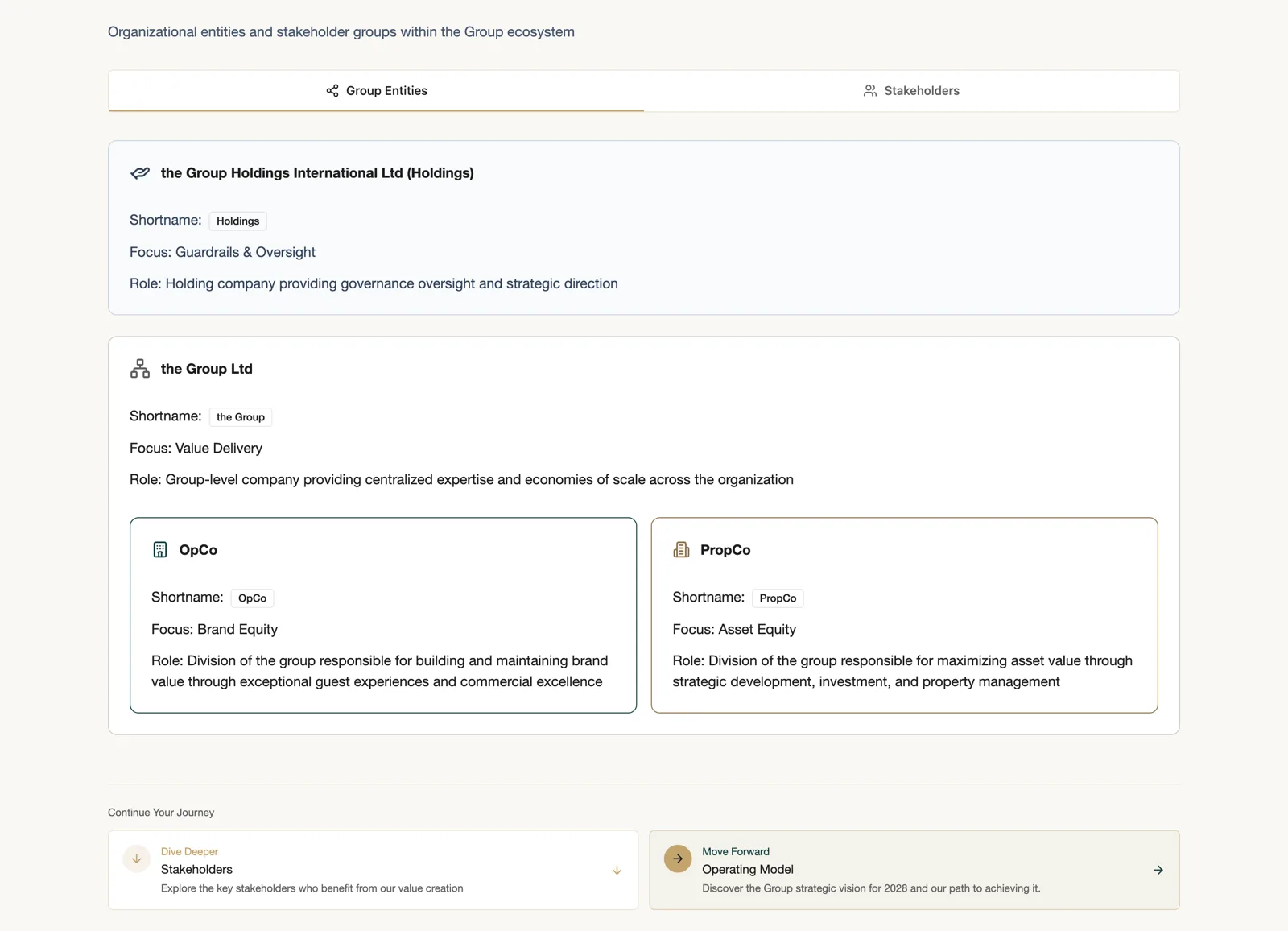
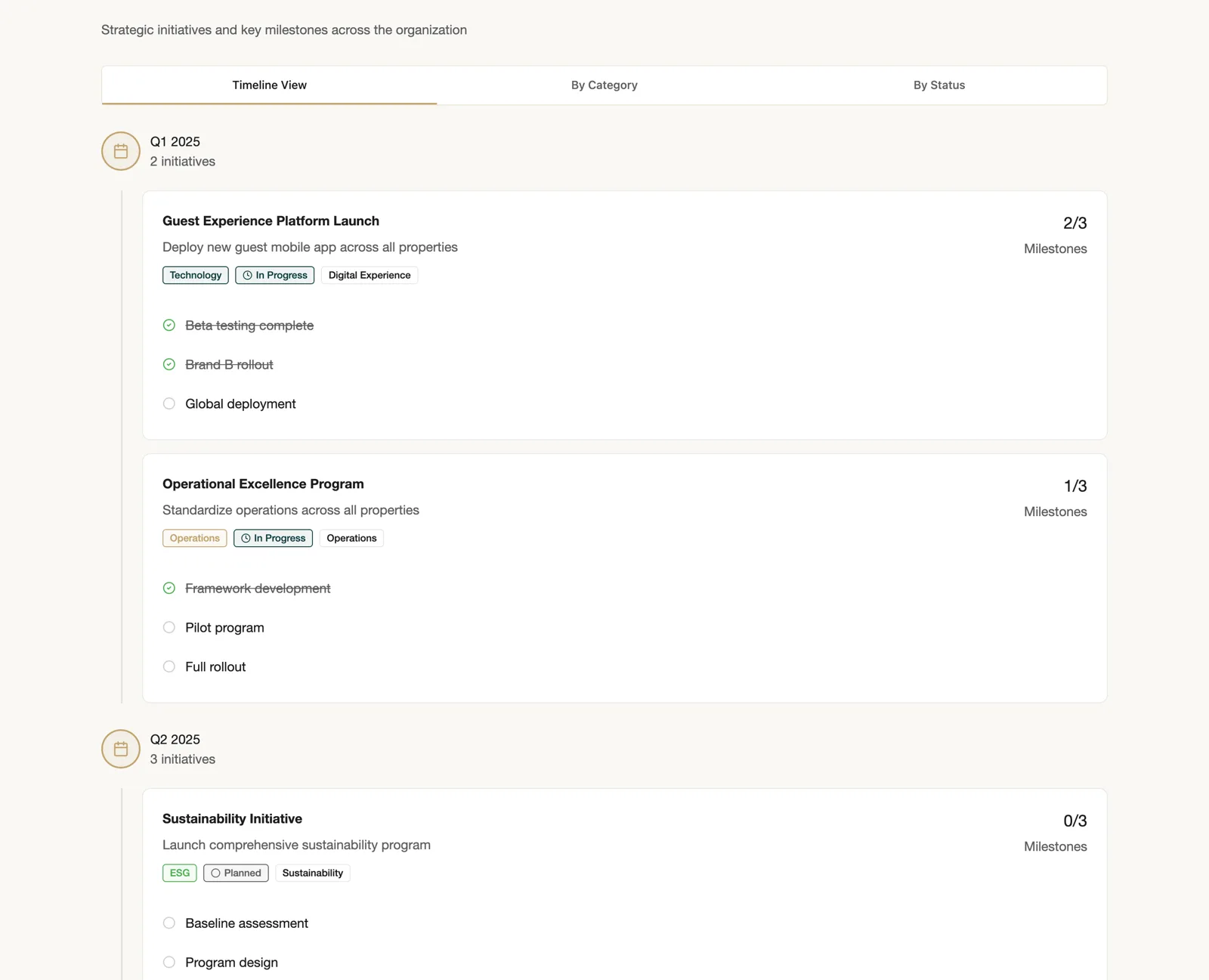
The work also supported development of the group's 3-year strategy. To make that strategy legible and usable across the organisation, I designed and built an interactive strategy site: vision, entity structure, operating model, value-generation lifecycle, cascading OKRs and delivery roadmap, navigable in one place rather than buried in decks.
Business / customer evidence
- The work supported the group’s 3-year strategy and connected six strategic objectives to 24 group-level targets and a quarterly delivery roadmap.
- The work demonstrates adoption of a shared operating language, governance structure and strategy product. It does not claim attributable guest-metric or revenue uplift while the engagement remains active.
Decision / trade-off
The central trade-off was short-term property or channel wins versus a portfolio-wide relationship model. The work prioritised a reusable group framework while pressure-testing it against real scenarios so it did not become abstract governance.
What I learned / next
A strategy becomes more useful when the operating logic is designed with the narrative. My next focus is measuring how consistently the lifecycle, ownership and review rhythms are used across live portfolio decisions.
Continue exploring
Related evidence and approach
Start a conversation
See a similar decision in your organisation?
Tell me where the evidence, ownership or implementation is getting stuck. I can help assess whether the approach in this case fits your context.