Belong · 2017 – 2021
A new front-end stack and distributed UX chapter
As Digital Product Owner and UX Chapter Lead, I set the standard for digital interactions and led a distributed UX chapter that improved sales, service demand and speed to market.
Quick read
How the product rebuild and UX chapter reinforced each other
- My role
- Digital Product Owner and UX Chapter Lead
- Key challenges
- Delivering features at a pace that met demand and maintained quality
- Enabling UX-dependent work without becoming a bottleneck
- Evidence
- Sales of Belong's mobile SIMs increased after the redesigned digital experience launched.
At a glance
- Led the work as Digital Product Owner and UX Chapter Lead
- Delivered a redesigned front-end stack with a design system and headless CMS foundation for personalisation
- Built a distributed UX chapter across other business teams
- Increased sales, reduced call volumes and made offers and campaigns 10× faster to market
Project snapshot
Scope and attribution
Engagement summary
- My role
- Digital Product Owner and UX Chapter Lead
- Duration
- Nov 2017 – Apr 2021
- Mandate
- Redesign Belong's front-end stack while building a distributed UX chapter that embedded customer evidence and experience-design practice across business teams.
- Team and collaborators
- Belong product, architecture, technology and business teams, with direct input from leadership and the implementation partner, Accenture.
- What I owned
- Digital product ownership for the front-end redesign, design system, headless CMS and personalisation foundations, alongside UX chapter leadership, capability design, OKRs, journeys, blueprints and experience principles.
- What others owned
- Product, architecture and delivery leaders owned implementation, technical decisions and performance outcomes across their respective areas.
- Constraints
- The capability had to mature while product delivery continued, without creating a specialist design function that became a bottleneck for every customer-led decision.
- Status
- The redesigned front-end stack and distributed UX chapter increased sales, reduced call volumes and made offers and campaigns 10× faster to market.
Evidence and confidentiality
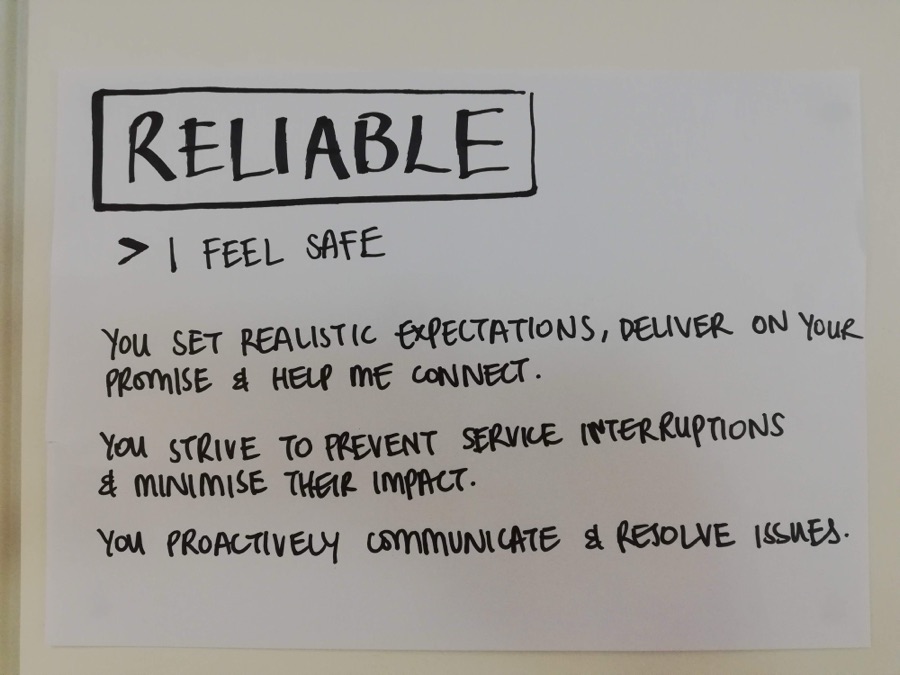
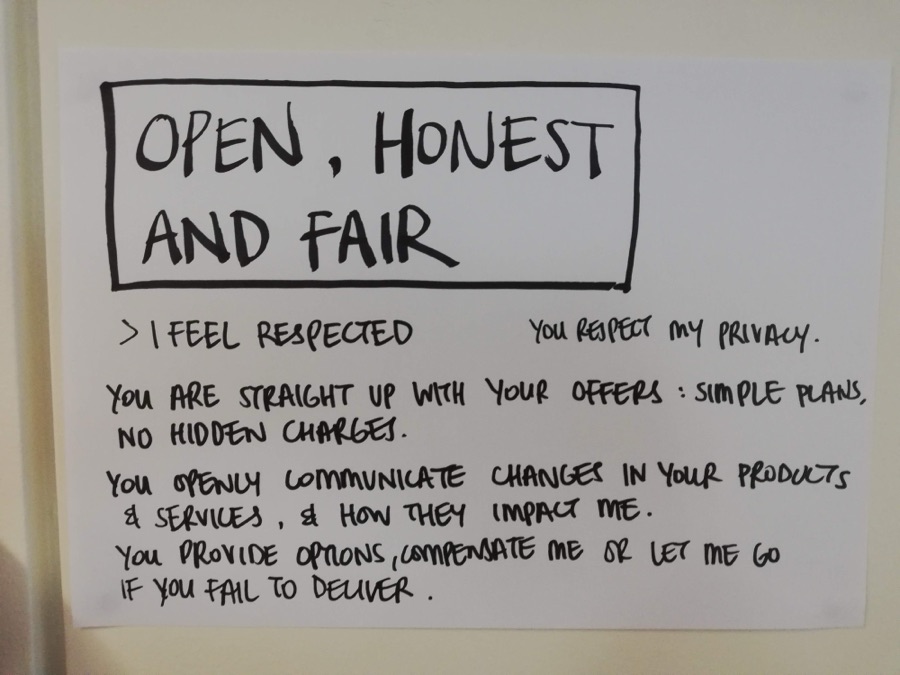
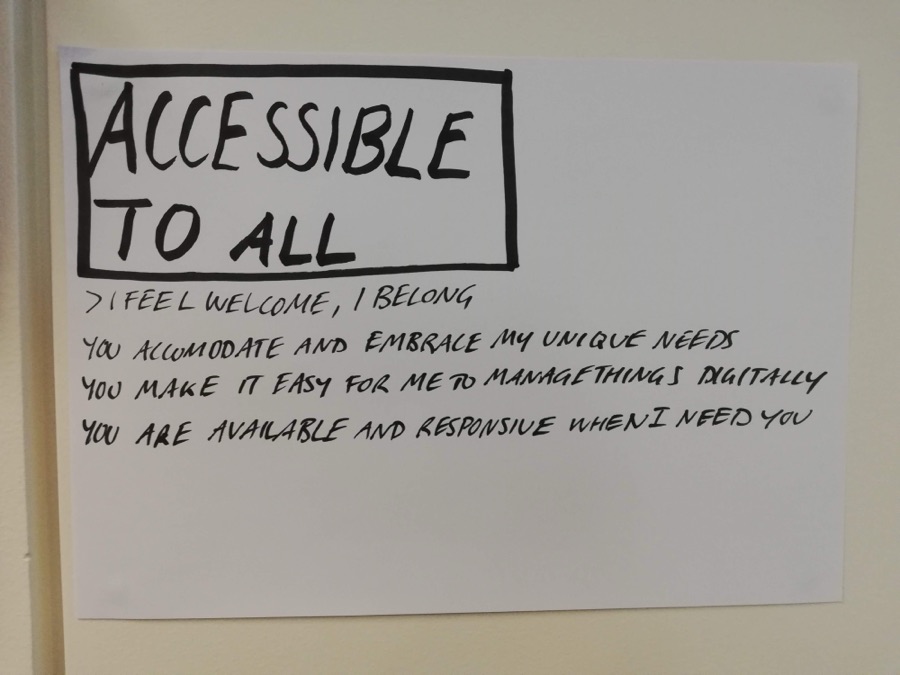
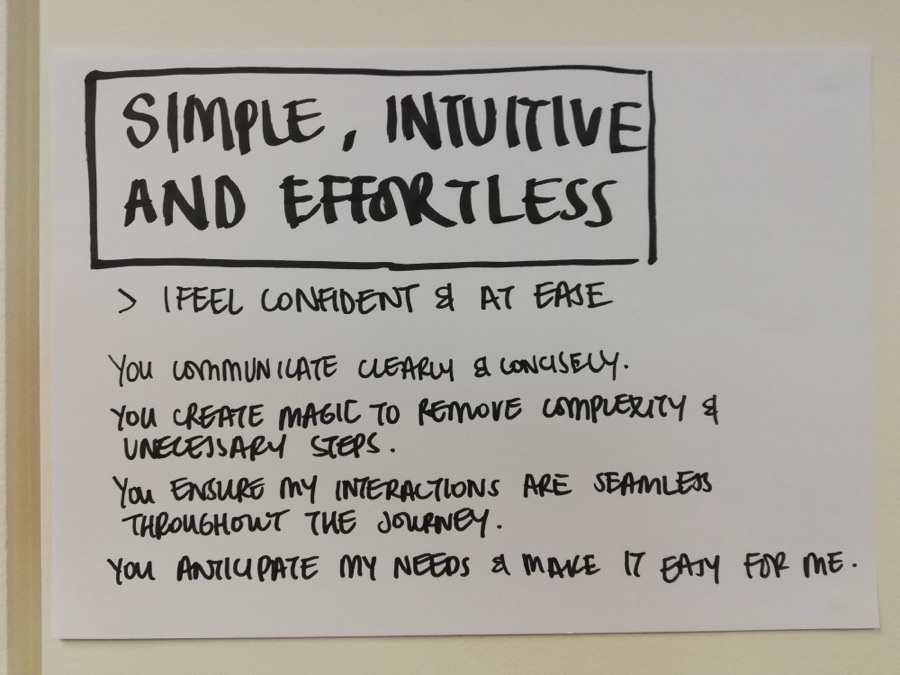
The workshop material and experience-principle photographs are from the Belong engagement. Confidential product backlogs, roadmaps and performance data are not shown.
The challenge
Belong needed more than another isolated journey map. Its front-end stack, content model and UX capability all had to change while product delivery continued.
The deeper challenge was organisational: build specialist quality and leadership without making every team dependent on a designer for routine customer-led decisions.
The approach
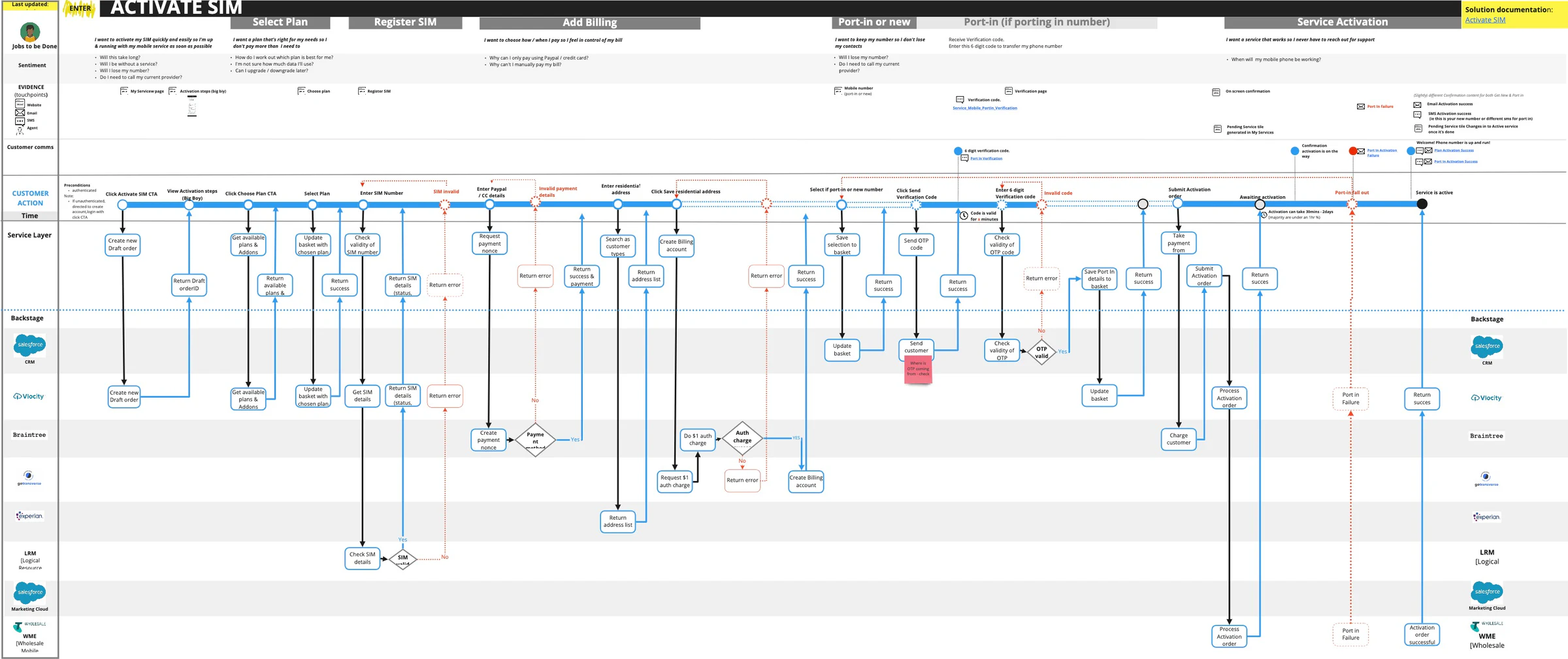
I began with Belong as a contracted Service Designer through NRI, establishing the foundational research, personas, journey maps, service blueprints and experience principles needed to make customer evidence usable across teams.
After training in the Scaled Agile Framework (SAFe), I became Digital Product Owner and UX Chapter Lead. I translated customer evidence into programme-increment priorities, backlog decisions, OKRs and delivery choices while coaching multidisciplinary teams and raising the quality of human-centred practice.
I led product direction for a complete front-end redesign, including a reusable design system and headless CMS foundation capable of supporting personalised offers and campaigns.
The operating model deliberately combined a specialist UX chapter with distributed practice: the chapter protected quality and coherence, while commercial and architecture teams gained enough capability to use the methods in everyday decisions.
Outputs delivered

Organisational outcomes
A reusable front-end system and headless CMS cut the time required to launch new offers and campaigns by 10×. That speed helped Belong take its place as Telstra's fighter brand in the Australian telecommunications market.
The distributed UX chapter kept faster delivery grounded in shared experience standards, allowing business teams to act independently without making UX a bottleneck.
Business / customer evidence
- Sales of Belong's mobile SIMs increased after the redesigned digital experience launched.
- Self-service actions were quickly adopted by customers and call volumes fell, reducing the volume of expensive off-shore contact centre calls.
Website before and after


Decision / trade-off
The choice was between centralising expertise in a specialist UX chapter and distributing enough practice for product and architecture teams to act independently. I built the chapter while deliberately coaching the surrounding organisation to use its methods.
What I learned / next
SAFe Product Ownership was useful because it created a repeatable cadence for turning customer evidence into programme-increment priorities, sequencing backlog work, exposing dependencies across commercial, architecture and delivery teams, and making trade-offs and acceptance decisions close to implementation. In a modern organisation where one experience crosses channels, platforms and teams, that structure helps UX insight become funded, coordinated work rather than a recommendation waiting outside delivery.
Continue exploring
Related evidence and approach
Start a conversation
See a similar decision in your organisation?
Tell me where the evidence, ownership or implementation is getting stuck. I can help assess whether the approach in this case fits your context.