Abu Dhabi Global Market (ADGM), via Arthur D. Little · 2024
Deciding where AI belongs in a financial centre's client service
A client relationship function buckling under growth, turned into a benchmarked, prioritised digitalisation programme, with explicit boundaries for what AI should handle, what it should never decide, and where a human stays in the loop.
Quick read
How service authority shaped the AI-enabled experience
- My role
- Senior Service Designer / CX Designer, via Arthur D. Little
- Key decision
- The work resisted an ‘AI everywhere’ answer.
- Evidence
- Four of eight shortlisted initiatives entered delivery within the same year, sequenced against wider AI and platform programmes.
At a glance
- ~100 remedies organised into 31 initiatives, 8 shortlisted, 4 in delivery within the year
- ~60 pain points surfaced across 28 journey steps, each assessed on 10 dimensions
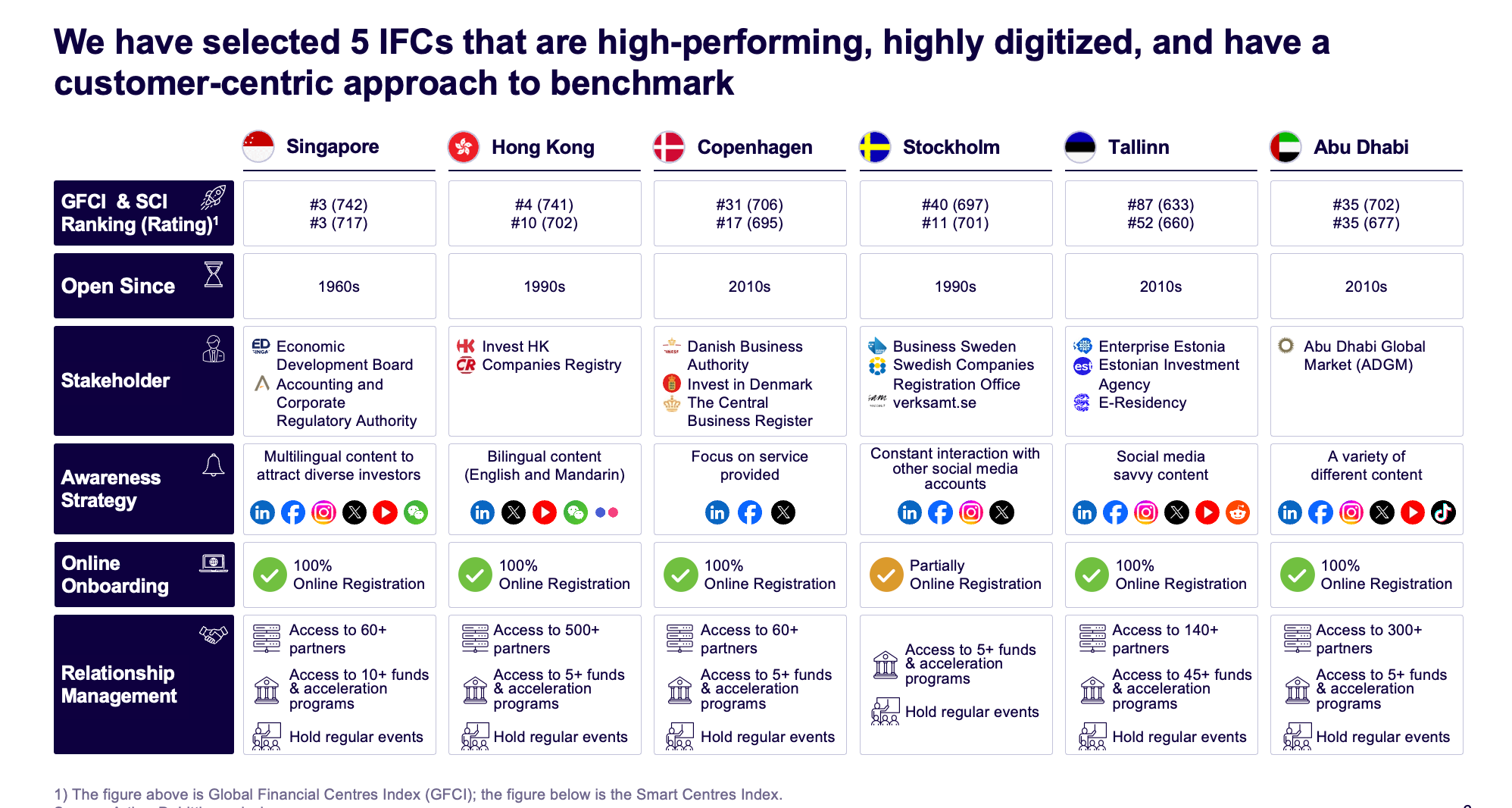
- 5 international financial centres benchmarked, plus 32 use cases beyond the sector
- AI boundaries defined across lead scoring, knowledge governance, internal GenAI support and customer-facing chatbots
Project snapshot
Scope and attribution
Engagement summary
- My role
- Senior Service Designer / CX Designer, via Arthur D. Little
- Duration
- Three-month client engagement in 2024
- Mandate
- Assess ADGM’s end-to-end client relationship service, benchmark relevant operating models and turn the evidence into a prioritised digitalisation programme with responsible boundaries for AI.
- Team and collaborators
- The Arthur D. Little engagement team, ADGM Markets sponsors and participants from seven ADGM departments.
- What I owned
- Lifecycle and pain-point assessment, benchmarking, workshop design and facilitation, initiative synthesis and prioritisation, plus the service boundaries for customer-facing and employee-facing AI.
- What others owned
- ADL and ADGM sponsors owned programme governance and final recommendations; ADGM product, platform and operational teams owned implementation.
- Constraints
- A regulated financial-centre context, rapid organisational growth, underused Salesforce capability, limited data integration and a three-month delivery window.
- Status
- Eight initiatives were shortlisted and four entered delivery within the same year; the case does not claim post-launch customer performance that was not available at handover.
Evidence and confidentiality
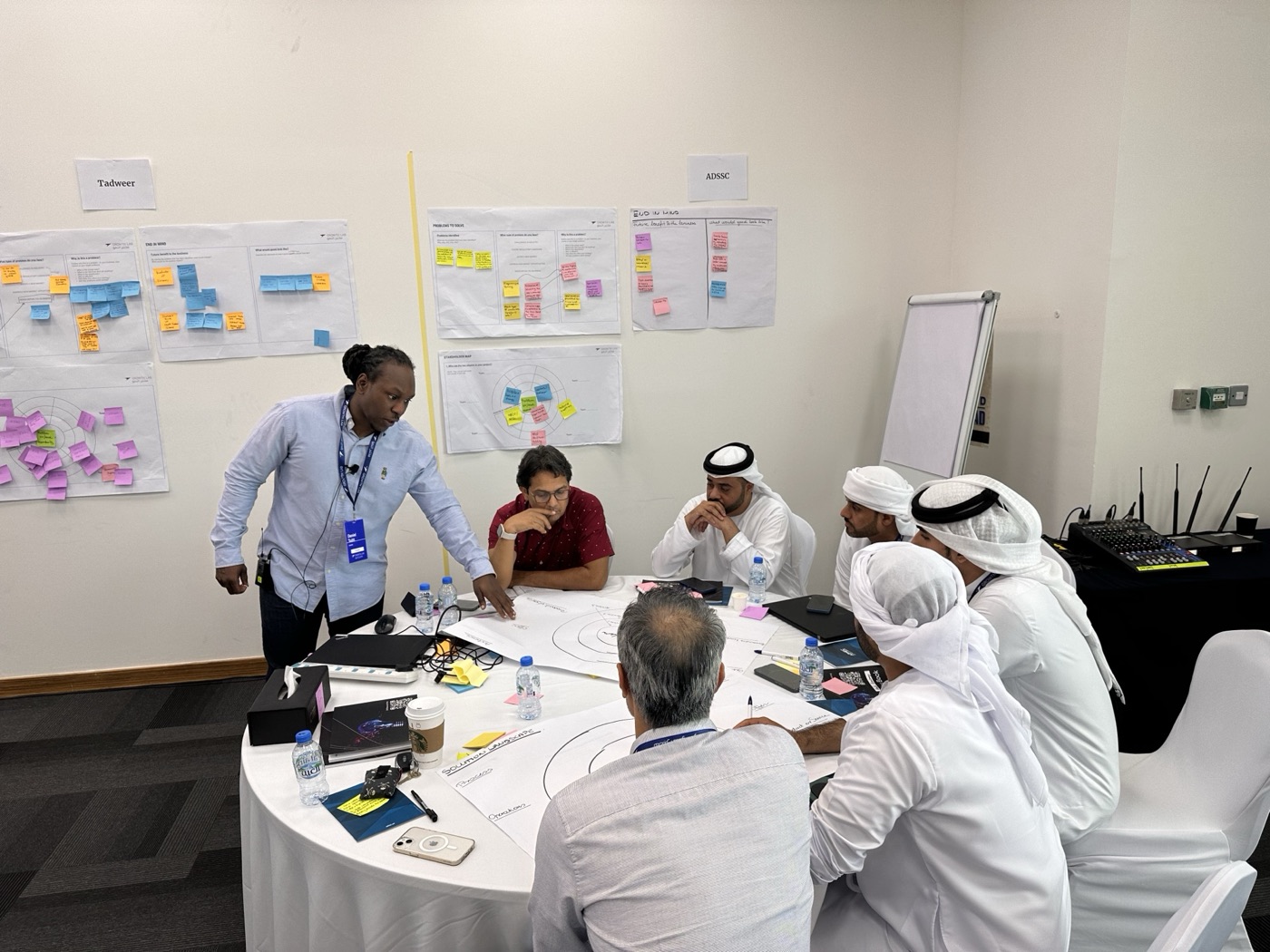
Workshop photographs are real. Operational detail is summarised and no client records, regulated data or confidential working files are displayed.
The challenge
ADGM, an international financial centre, needed to scale its client servicing and improve responsiveness. Client enquiries were growing rapidly with the centre's expansion to Al Reem Island, lead management was rudimentary with no scoring mechanism, Salesforce was largely underutilised, and limited data integration placed a heavy manual burden on the team's ability to scale.
The approach
Over an 11-week engagement via Arthur D. Little, I assessed the current state across the full customer lifecycle: 5 lifecycle phases, 12 journey stages and 28 journey steps, each examined across 10 dimensions, surfacing around 60 pain points. Five international financial centres were benchmarked alongside 32 use cases from beyond the sector.
Three ideation sprints and six workshops with seven ADGM departments turned that evidence into roughly 100 remedies, organised into 31 initiatives and shortlisted by impact and complexity to 8, with 4 prioritised for immediate delivery: governance of the customer-facing knowledge base with defined maker, checker and editor roles; a relationship management framework with KPIs tied to client and commercial outcomes; an internal GenAI assistant supporting employee experience; and a customer-facing AI chatbot. For each, the service model defined what AI should know, what it should be trusted to decide, and where a human must remain in the loop.
Outputs delivered
In practice
Organisational outcomes
ADGM's Markets team began delivering the high-priority initiatives within the same year, sequenced against the organisation's wider AI and platform programmes. The digitalisation effort gained a clear, benchmarked roadmap with governance designed in from the start and explicit boundaries for where AI could operate and where it could not.
Business / customer evidence
- Four of eight shortlisted initiatives entered delivery within the same year, sequenced against wider AI and platform programmes.
- The work demonstrates programme readiness and implementation start. It does not claim post-launch service-time, satisfaction or cost-to-serve outcomes that were unavailable at handover.
Decision / trade-off
The work resisted an ‘AI everywhere’ answer. Knowledge governance, relationship-management measures and human escalation were prioritised alongside automation so the service could scale without delegating unsuitable decisions to AI.
What I learned / next
AI service design starts with authority and knowledge quality, not the interface. Important follow-up steps include tracking adoption, escalation quality and service responsiveness against the boundaries defined during design.
Continue exploring
Related evidence and approach
Start a conversation
See a similar decision in your organisation?
Tell me where the evidence, ownership or implementation is getting stuck. I can help assess whether the approach in this case fits your context.